The engine does not turn over. The dashboard may flicker, click once, or stay dark after a stop in West Palm Beach. Heat can make a battery that seemed usable yesterday reveal its limits quickly, especially after the vehicle has been sitting in the sun or has made several short trips.
At that moment, the goal is not to prove that the battery is the only issue. A no-start can also involve battery connections, the starting system, or another electrical problem. The useful move is to protect your location, avoid draining the remaining charge, and decide whether roadside help can safely get you moving or whether the vehicle needs towing.
Immediate action: take 60 seconds before trying again
- Do: Shift into park, set the parking brake, and turn off the air conditioning, lights, audio, chargers, and other accessories.
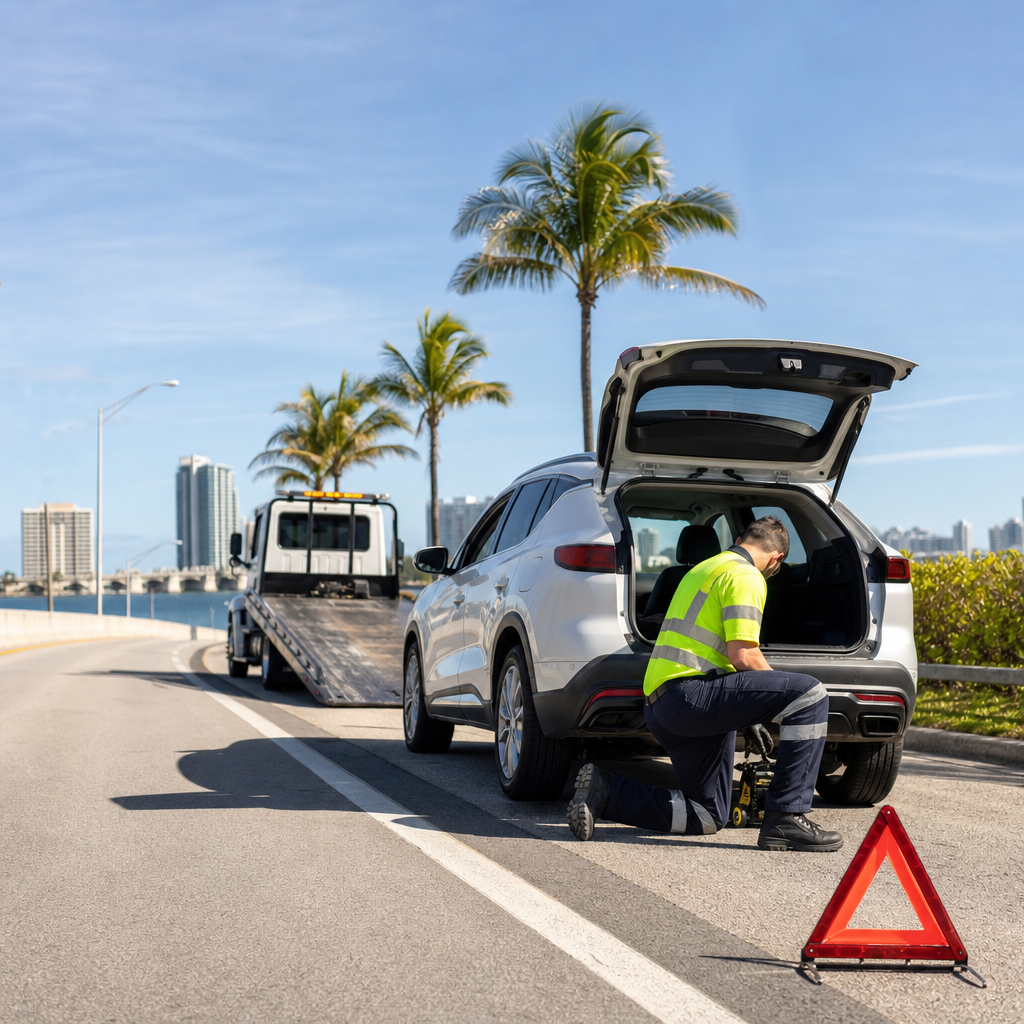
- Do: Look around before exiting. If the vehicle is in an exposed or unsafe position, prioritize getting roadside assistance instead of opening the hood or repeatedly attempting a start.
- Don’t: Keep turning the key or pressing the start button over and over. Repeated attempts can drain the remaining battery charge.
- Don’t: Assume a jump start is automatically the answer if you see smoke, smell something burning, notice leaking fluid around the battery area, or see a swollen or damaged battery case.
If the vehicle is safely parked and the concern is a weak battery, a professional jump start service may be the appropriate first call. If the car starts but has other warning signs, stalls, or cannot be safely driven, ask for guidance on towing rather than taking a chance with another stop.
Before the problem: reduce heat-related surprises
South Florida heat does not need a dramatic event to affect battery reliability. High temperatures can add stress to a battery over time, and a weak battery may become noticeable during an ordinary errand, after parking outdoors, or when the vehicle needs extra electrical power at startup.
Do make a quick pre-drive check part of hot-weather routines
- Do: Notice slower-than-normal cranking, delayed startup, dim interior lights, repeated clock or settings resets, or new electrical behavior. These are reasons to plan ahead instead of waiting for a no-start.
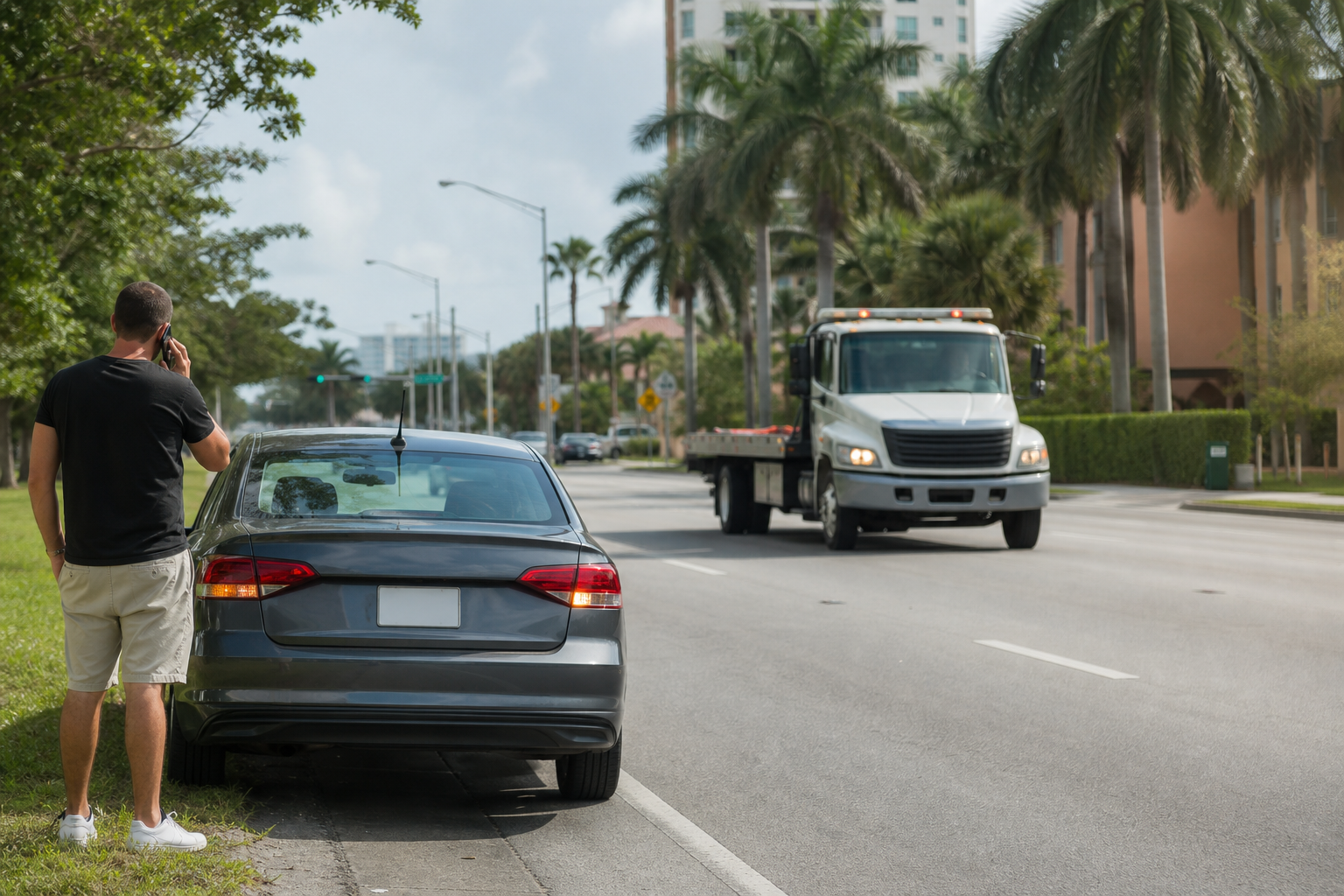
- Do: Keep your phone charged when leaving home. A charged phone is often the most useful battery-failure tool because it lets you share an accurate location and receive updates.
- Do: Know where your vehicle’s battery is located and where the approved jump points are. Some vehicles have jump terminals under the hood even when the battery itself is elsewhere.
- Do: Park with enough room to access the vehicle safely when possible. Tight spaces, blocked driveways, garages, and crowded lots can affect how a roadside provider reaches the car.
Don’t turn a warning sign into a roadside problem
- Don’t: Ignore a pattern of slow starts simply because the vehicle eventually starts.
- Don’t: Leave accessories running after shutting off the engine if the battery already seems weak.
- Don’t: Attempt improvised battery work with loose tools, damaged cables, or unknown jump procedures.
- Don’t: Count on a brief drive to solve every battery concern. A vehicle that starts after a jump still needs attention if it continues to struggle or shows warning lights.
At the roadside: choose the safest next move
A battery issue is manageable when the vehicle is in a safe place. It becomes more urgent when the car is blocking access, sitting where traffic passes closely, or cannot be reached safely for a jump.
Call for help now if any of these apply
- The vehicle will not start after one or two reasonable attempts.
- You are in a location where standing outside or opening the hood feels unsafe.
- The battery area appears damaged, hot, swollen, leaking, smoking, or has a strong unusual odor.
- The engine starts with assistance but quickly dies, warning lights remain on, or the vehicle does not seem dependable enough to drive.
- You need the vehicle moved from a space where a jump start is not practical or safe.
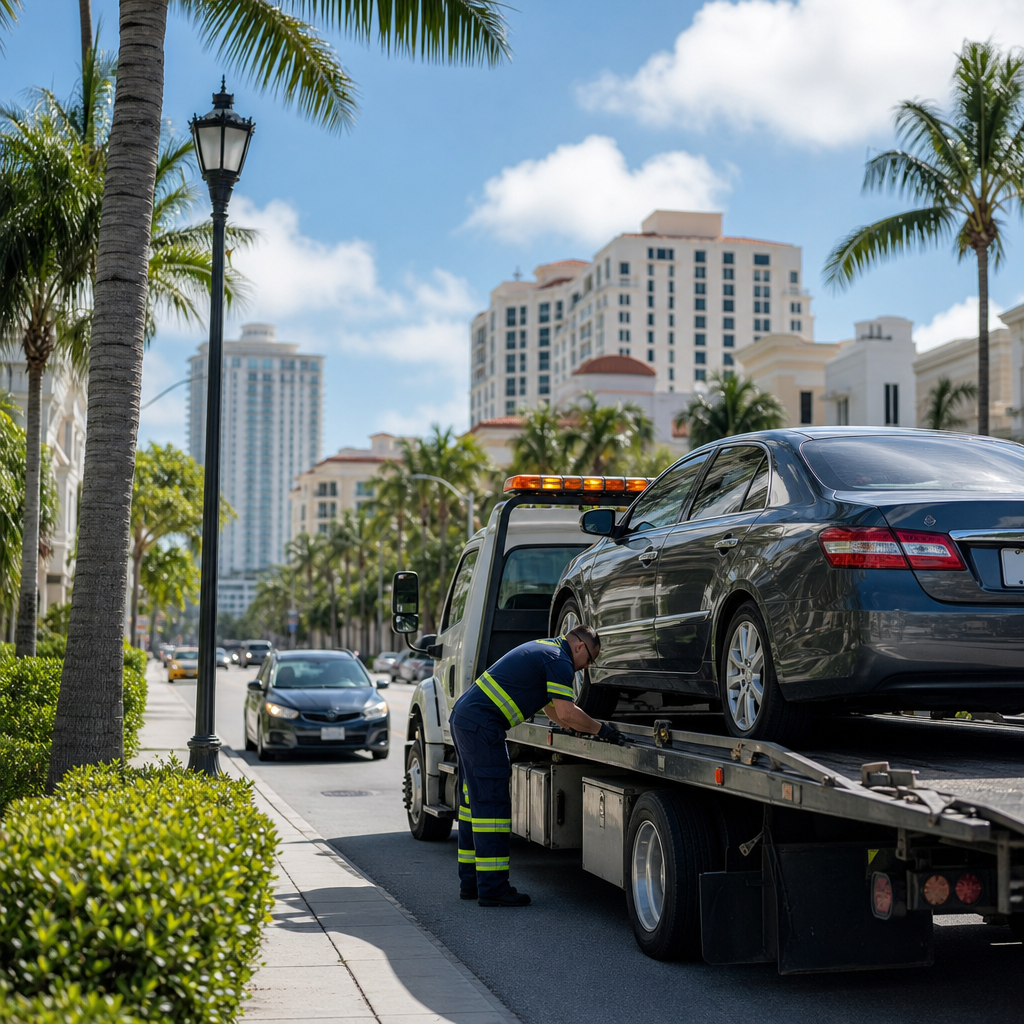
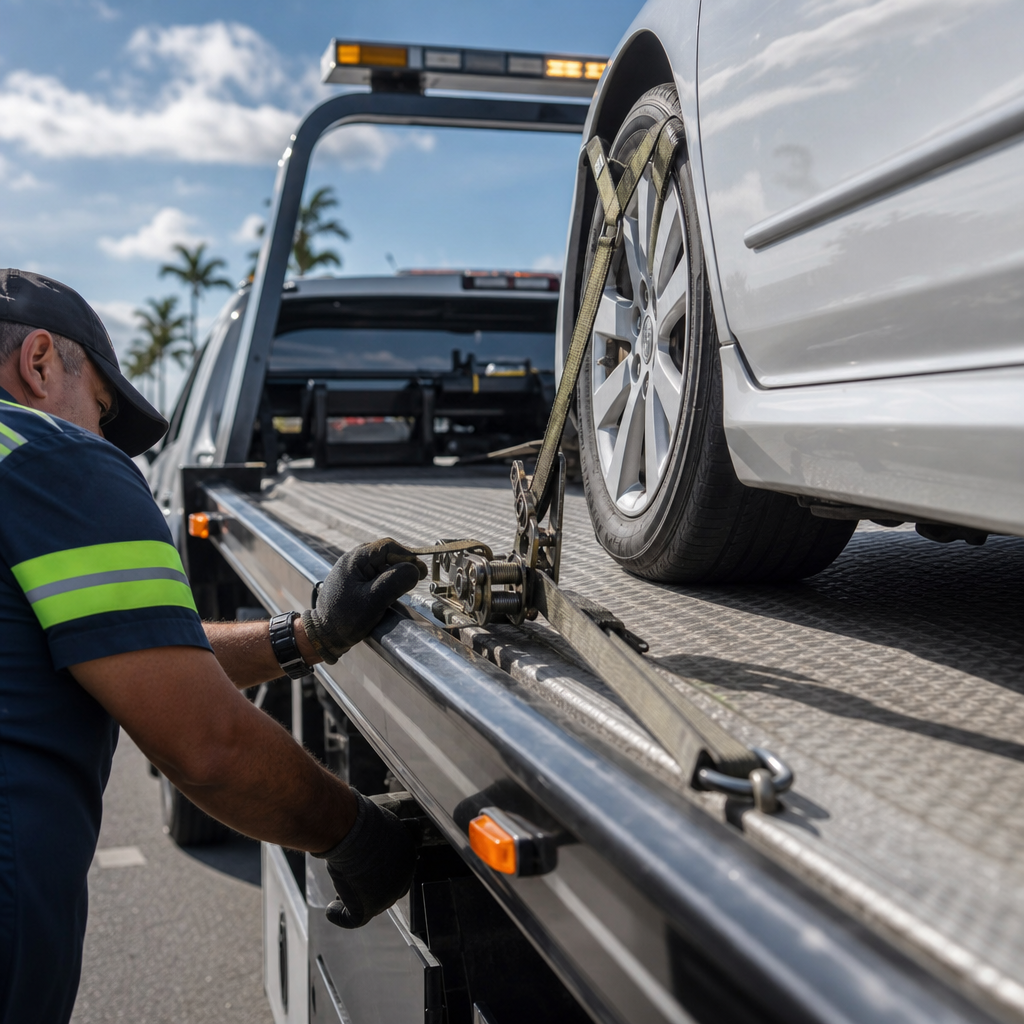
For a no-start in West Palm Beach, roadside assistance can help evaluate the immediate situation and provide a controlled service handoff. If continued driving is not a sensible option, request flatbed towing or explain that you need a tow when you call.
Give dispatch details that help them find and reach you
Location accuracy matters more than a general neighborhood description. Start with your current map pin or full visible address. Then add the vehicle’s make, model, color, and plate details if requested. Explain where the car sits: in a parking space, garage, driveway, roadside shoulder, lot entrance, or another access point. Mention any gate, low clearance, narrow approach, blocked lane, or need for the provider to enter from a particular side.
Describe the symptom plainly: “single click,” “rapid clicking,” “no lights,” “slow crank,” or “started after a jump but died.” This gives the dispatcher useful context without requiring you to diagnose the vehicle.
While waiting: protect yourself and preserve the remaining charge
- Do: Keep hazard lights on if they are needed for visibility and can remain on safely. If you are parked securely away from traffic, avoid unnecessary electrical use.
- Do: Keep your phone available, with sound on, so the service provider can confirm your exact position.
- Do: Stay in a safer position away from moving vehicles. If remaining inside the car is safer, stay inside with doors locked unless conditions require otherwise.
- Do: Have keys available and know how to unlock the vehicle, release the hood if requested, and place the transmission in the required position when a tow operator arrives.
- Don’t: Accept a jump from an unprepared stranger if the setting, cables, or vehicle access makes the attempt unsafe.
- Don’t: Touch battery terminals, move cables, or inspect under the hood if there are signs of damage or heat.
- Don’t: Keep restarting the vehicle while waiting. Save any remaining charge for necessary communication and safe vehicle operation.
If conditions change—your vehicle is moved, access becomes blocked, or you discover a safer pickup point—update dispatch promptly. A precise update can prevent the service vehicle from searching the wrong entrance or approaching from the wrong direction.
After service arrives: make the next decision deliberately
A successful jump start is a roadside solution, not a complete explanation. Once the vehicle starts, tell the technician what happened before the failure: slow starts, recent warning lights, accessories left on, repeated clicks, or a battery that has needed help before. Those details can help determine the practical next step.
- Do: Ask whether the vehicle appears suitable to drive from the service location or whether towing is the safer choice.
- Do: Follow the technician’s instructions before disconnecting equipment, moving the vehicle, or shutting the engine off again.
- Do: If towing is recommended, provide the destination and any access instructions clearly.
- Don’t: Treat a restarted engine as proof that the issue cannot return on the next stop.
- Don’t: Continue driving if the vehicle has electrical warnings, unusual behavior, or a starting problem that reappears.
For a calm handoff, tell the provider exactly where you need the vehicle moved and what access is available at that destination. For urgent no-start situations, 24-hour towing is available as the next step when roadside starting is not enough.
Quick questions West Palm Beach drivers ask
Can heat cause a car battery to fail without much warning?
Heat can contribute to battery wear over time, and a battery that has been weakening may show itself through a sudden no-start or slow crank. The symptom alone does not confirm the exact cause, so use safe roadside steps and seek help if the vehicle will not start reliably.
Should I keep trying to start the car after it clicks?
No. Turn off unnecessary accessories and avoid repeated attempts. If one or two attempts do not work, arrange assistance rather than using up the remaining battery charge.
Is a jump start safe if the battery looks damaged?
No. Do not attempt a jump if the battery area shows leaking, swelling, smoke, visible damage, or a strong unusual odor. Move away from the immediate area if safe and call for professional assistance.
What should I tell a towing or roadside dispatcher?
Share your exact location or map pin, vehicle description, the no-start symptom, your safe access point, and any obstacles such as a gate, garage, narrow space, or blocked approach. Also say if the car is in a position that makes a jump start unsafe.
My car started after a jump. Can I assume the problem is over?
Not necessarily. A jump can get the engine running, but it does not establish why the battery lost power or confirm that the vehicle will restart later. If symptoms return or the vehicle does not seem dependable, arrange towing instead of risking another roadside stop.